
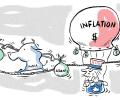
The rise in US bond yields spooked investors last week and there could a further increase given the inflation dynamics, according to Christopher Wood, global head of equity strategy at Jefferies. "The US bond market sell-off has continued over the past week, and with it the increased potential for an inflation scare. "Still, there is plenty of scope for bonds to sell off more since the last time the 5-year forward inflation expectation rate was running at current levels (namely in early December 2018), the 10- and 30-year bond yields were significantly higher at 2.91 per cent and 3.17 per cent, respectively," the market guru said in his newsletter GREED & fear. The 10-year and 30-year US Treasury finished at 1.34 per cent and 2.13 per cent, respectively, last week.

The finance ministry will kick-start the exercise to prepare the annual Budget for 2023-24 from October 10, in the backdrop of revival of the Indian economy and fears of recession in developed countries. The budget for the next year will have to address critical issues of high inflation, job creation, boosting demand, and putting the economy on a sustained 8 per cent-plus growth path. On Wednesday, finance minister Nirmala Sitharaman said inflation is no longer "red-lettered" and the priority for the government now is job creation and boosting growth.

The Union home ministry has recommended the special CAG audit taking note of a May 24 letter by Lieutenant Governor V K Saxena which pointed out 'gross and prima facie financial irregularities' in the 'reconstruction' of the chief minister's official residence, they claimed.

From the Sensex pack, Tata Motors, Sun Pharma, Wipro, Tata Consultancy Services, UltraTech Cement, Tech Mahindra, Bajaj Finserv, HCL Technologies, Infosys and IndusInd Bank were the major laggards. NTPC, Power Grid, Reliance Industries, Tata Steel, HDFC and HDFC Bank were the major winners.

Any concerned citizen ought to start practicing hygiene by washing their hands properly and be aware of the brands that are certified.
'The biggest risk to the Indian markets from a 12-18-month view is that the current government does not get re-elected, or loses in a way that is not represented at all in the next central government.'

"They tried to buy our MLAs in Delhi and now in Punjab but we exposed them (BJP)," Kejriwal said.

Despite no change in interest rates, India's largest lender, State Bank of India, last week became among the latest to lower deposit rates, often a precursor to lower lending rates, something some banks have already done for certain consumer loans.

US-Iraq war fears may affect the sentiments in gilts market despite India's strong fundamentals and smooth sailing of the government's market borrowing now at Rs 1,34,036 crore (Rs 1,340.36 billion), PNB Gilts warned
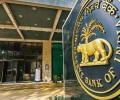
With inflation remaining at elevated levels, central banks around the world, including the Reserve Bank of India (RBI), will kill excess demand in economy over the next six to eight months, sources in the know said. They also indicated that there could be a rate hike in June, when the inflation forecast for the current financial year would be raised. The RBI, the sources said, might announce more steps such as raising the limit on held-to-maturity (HTM) bonds to support government borrowings but might not come out with any further quantitative easing GSAP (Government Securities Acquisition Programme) measures.

Strong month-end demand for the US currency mainly from oil importers along with currency futures expiry related purchases predominantly weighed heavily on the forex market and haunted investor sentiment.

Nifty PSU bank index dropped nearly 2%

A big hit to China's growth or to Europe's financial system could certainly tip the global economy.

Chief Economic Advisor Arvind Subramanian says that he hopes GDP growth will be at the upper end of the 7-7.5 per cent range.

The Indian rupee is expected to trade between 80 and 84 against dollar in the first three months of 2023 with support from overseas inflows though worsening current account deficit (CAD) and reduced interest rate differential between the US and India pose challenges. According to a Business Standard Poll of 10 participants, most said the rupee could gain strength in January due to foreign inflows, and the Reserve Bank of India (RBI) is not expected to allow the currency to depreciate ahead of the Union Budget scheduled on February 1. The rupee depreciated 10.15 per cent in 2022, its worst performance since 2013 as the war in Europe and the interest rate increase by the US Federal Reserve prompted investors to flee emerging markets.

Overseas investors have pulled out a net Rs 1,14,855.97 crore from the Indian markets in the current year so far, amid heightened geopolitical tensions and inflation concerns. Foreign portfolio investors have sold domestic equities worth Rs 48,261.65 crore so far this month, taking the year-to-date tally this year to a massive Rs 114,855.97 crore, according to depositories data. The exodus of foreign investors was largely owing to inflationary pressures and deepening global macroeconomic conditions following the Russia-Ukraine war, experts said.

India is one of the few countries in the region that enjoys good relations with both Israel and Saudi Arabia, and IMEC would allow it to recreate the old Spice Route to Europe. All this is in jeopardy now, notes Rajeev Srinivasan.

The Indian economy appears to have slowed down in 2018-19 due to lower private consumption, tepid growth in fixed investment and muted exports, a finance ministry report has said.

Let us UNDERSTAND one very important thing. We are in a sweet spot as far as returns are concerned.

Equity markets will be driven by the outcome of the US Federal Reserve's interest rate decision this week, analysts said. Moreover, equity benchmarks will also continue to be guided by foreign fund movement and trend in Brent crude oil, they added. "The global markets are looking nervous after the US inflation numbers, which have caused the dollar index to hover around 110," said Santosh Meena, head of research, Swastika Investmart Ltd. Now everyone is eyeing the outcome of the upcoming US Federal Open Market Committee (FOMC) meeting.

Benchmark BSE Sensex rebounded by 344 points while Nifty closed above the 16,000 level in choppy trade on Friday, snapping the four-day falling streak on renewed buying interest from foreign funds and firm global trends. The 30-share BSE barometer climbed 344.63 points or 0.65 per cent to settle at 53,760.78. During the day, it jumped 395.22 points or 0.73 per cent to 53,811.37.

Following a gap of several months, global brands like Walmart have started lifting orders from Tiruppur's garment makers, leading to growth in knitwear exports in January after five months. Knitwear exports from Tiruppur increased 1.5 per cent in dollar terms and 11.6 per cent in rupee terms in January. According to the Tiruppur Exporters' Association (TEA), global majors have started placing more orders from the region.

The contrast between the two meetings couldn't have been more stark, yet, both were organically linked, the latter a show of support for the former.

BofA Securities has revised its year-end Nifty target from its earlier projection of 16,000 to 14,500 now - down over 6 per cent from the current levels. Fast tightening monetary conditions, slowing growth/fears of US recession and the likely Nifty EPS (earnings per share) cuts, BofA Securities said, are the key headwinds for the markets in the near-term. However, clarity on macro and monetary policy outlook in the US/India, it said, is the silver lining that could see markets bottom out by August/September 2022.
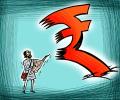
The rupee appreciated 7 paise to 79.74 against the US dollar in early trade on Thursday as a positive trend in domestic equities supported the local unit. However, a strong American currency overseas and forex outflows restricted the rupee's gain, dealers said. At the interbank foreign exchange, the rupee opened at 79.72 against the American dollar, then went lower to trade at 79.74 against the greenback in early deals, registering a gain of 7 paise over the last close.

The rout in Adani Group stocks after US-based short seller Hindenburg Research released a report on January 24 has sparked a rebound in trading activity this month. The average daily trading volume (ADTV) for the cash segment (both NSE and BSE combined) so far in February stands at Rs 59,346 crore, and is around 15 per cent more than the previous month's tally of Rs 51,844 crore, which was the lowest in six months. The ADTV for the futures and options (F&O) segment rose to a record Rs 204 trillion (notional turnover) against Rs 202 trillion in January.

Chinese stocks plummeted 9 per cent on Monday

The first step to keeping your job safe, experts tell Rediff.com's Divya Nair, is understanding why layoffs happen.

Raut said the statement might result in a rift in the MVA, which comprises the Congress and the Nationalist Congress Party, apart from the Uddhav-Sena.

The sharp correction in the Indian markets from their peak levels has made valuations attractive, say analysts, who advise buying selectively, but only from a long-term perspective. Fifty-six of the Nifty 100 stocks, according to Mahesh Nandurkar, managing director at Jefferies, now trade below the 10-year historical averages, including stocks in financial, select auto, and pharma sectors. "Valuation (one-year forward consensus price-to-earnings, PE) has declined 25 per cent from October 2021 peak, almost matching the 33 per cent price-earnings contraction during the 2011 tightening cycle when repo rates went up by 375 basis points (bps) versus 250 bps this cycle.

Gold prices hit record high in the third week of March as fears of bank collapses and high inflation led investors to the traditional safe haven. Gold prices are often inversely correlated to dollar strength because the international price is dollar-denominated. The Federal Reserve's (Fed's) stance indicates that the dollar may appreciate further since it is prepared to keep pushing up policy rates. But demand for gold is also up - the World Gold Council claims central banks are buying in addition to private demand.

A majority of the CEOs are expecting the economy to show growth in the next financial year on the back of rising consumer spending and a sharp turnaround in rural India.

Gehlot said even within the party, there is an opinion in favour of making Rahul the new president.

Jim Ratcliffe's company INEOS formally entered the bidding process to buy Manchester United on Tuesday, months after the club owners, the Glazer family, said they were considering selling the club as they explore "strategic alternatives".

Whenever there is an evaluation scheme, it is human tendency to score as high as possible. None would like to highlight their shortcomings, and everyone likes to highlight their positives. This is what is happening in this context of rankings as well, points out Profesor N Ravichandran.

Sisodia on Sunday hit out at Prime Minister Narendra Modi.

Though Indian banks don't have large exposure to subprime mortgages, analysts are worried at the rise in their restructured loan portfolios and deterioration in credit quality.

With the Nifty50 just about 3 per cent away from its all-time closing high of 18,812 points, analysts at BofA Securities suggest investors book profit. Their reasons for the advice include risks like the possibility of a cut in corporate earnings growth forecasts, high valuation (one-year forward P/E of 19.5x), interest rates staying elevated for longer-than-expected and credit tightening. Going ahead, they expect the Nifty50 index to drop to 16,000 levels - down nearly 12 per cent from the current level of 18,255 points, which they believe would be a good time to buy.

Amid fears of a third wave of coronavirus pandemic and hardening of retail inflation, the Reserve Bank is likely to maintain status quo on interest rate and watch the developing macroeconomic situation for some more time before taking any decisive action on monetary policy. The RBI is scheduled to announce its bi-monthly monetary policy review on August 6 at the end of the three-day meeting -- August 4-6 -- of the Monetary Policy Committee (MPC). The RBI Governor-headed six-member MPC decides on the key policy rates.

In the prevailing difficult circumstances, the Congress is the only party that can provide capable and decisive leadership to the country, Kharge asserted.
 © 2026 Rediff.com - Advertise with us - Disclaimer - Privacy Policy - Sitemap - Feedback - About us - Terms of use - Grievances